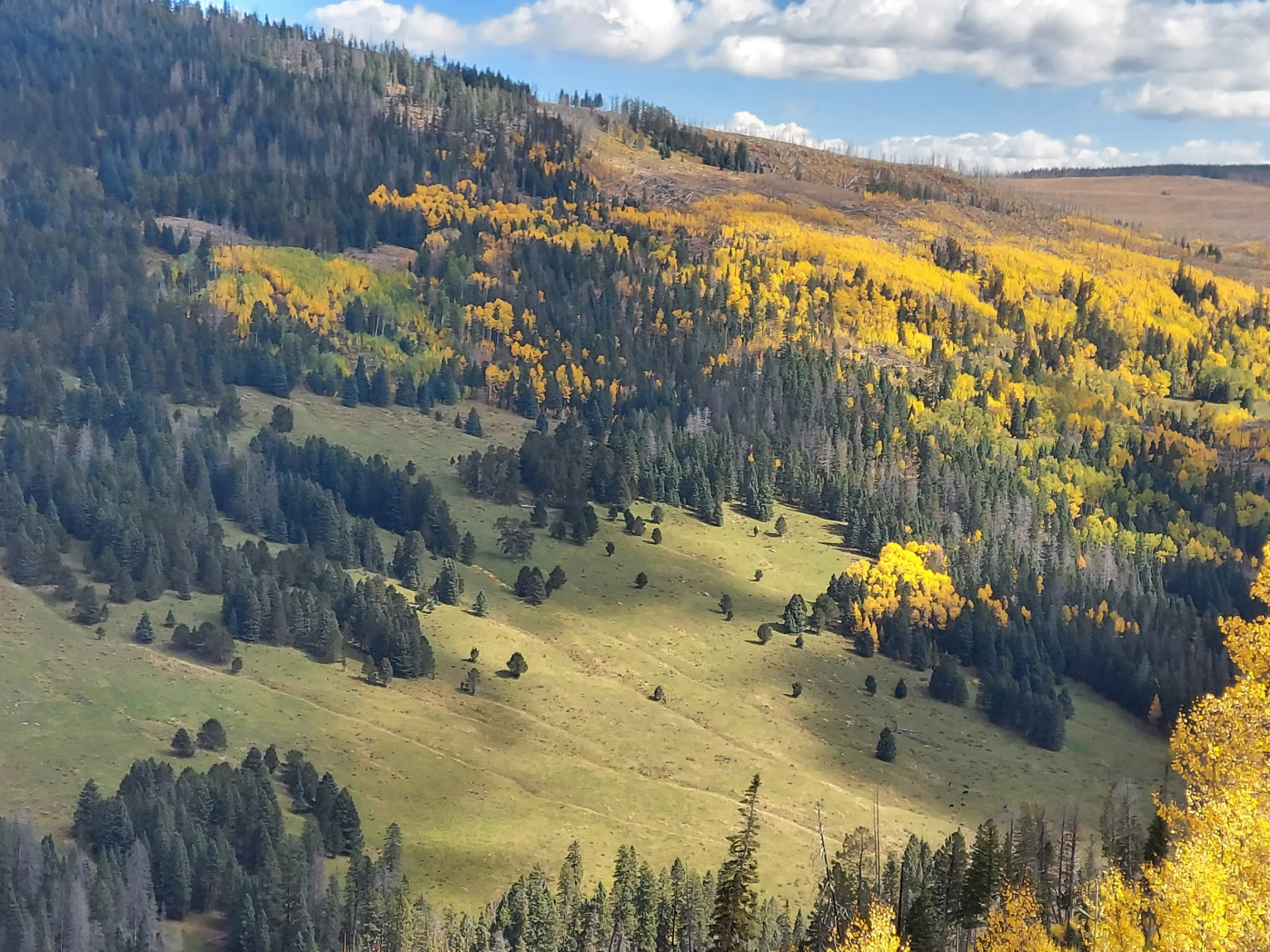
Golden aspens in the mountains above Santa Fe

Jai’s House · Northern New Mexico

Santa Fe

Art-filled streets, living cultures, and wild mountain country. Get to know the place we call home.

The City Different

Main attractions

Start downtown, wander the galleries, then follow your curiosity. Check each destination’s official site for current hours, tickets, and accessibility.

History · Downtown

Santa Fe Plaza & Palace of the Governors

The historic heart of the city, surrounded by adobe architecture, shops, and the New Mexico History Museum. The Palace portal hosts Native American artisans through its vendor program.

Visit website

Art · Galleries

Canyon Road

A walkable stretch of galleries, sculpture gardens, and studios, with art ranging from traditional Southwestern work to contemporary pieces.

Visit website

Art · Museum

Georgia O’Keeffe Museum

Explore the life and work of Georgia O’Keeffe and the landscapes that shaped her connection to northern New Mexico.

Visit website

Culture · Museums

Museum Hill

Visit the Museum of International Folk Art and the Museum of Indian Arts & Culture, with the Santa Fe Botanical Garden nearby.

Visit website

Art · Immersive

Meow Wolf: House of Eternal Return

An immersive, artist-built world of rooms, stories, and unexpected passages in Santa Fe’s original Meow Wolf exhibition.

Visit website

Local life · Food & Art

Santa Fe Railyard

Contemporary art, public spaces, and the Santa Fe Farmers’ Market make this a lively place to spend a morning.

Visit website

Beyond the city

National monuments, a historical park, a preserve, state parks, and national forest surround Santa Fe. These are distinct public-land designations, each with its own access rules.

National Monument

Bandelier

Ancestral Pueblo places, volcanic-tuff cliffs, and canyon trails in the Jemez Mountains. Check shuttle arrangements and trail access before visiting.

Park information

National Historical Park

Pecos

Pecos Pueblo, mission remains, and trails exploring a crossroads of Pueblo, Spanish, and American history east of Santa Fe.

Park information

National Preserve

Valles Caldera

An immense volcanic landscape of meadows and forest, known for elk, scenic drives, and high-country exploration.

Park information

State Park

Hyde Memorial

Pine forest and Little Tesuque Creek in the Sangre de Cristo Mountains, with hiking, camping, and winter recreation close to Santa Fe.

Park information

State Park

Cerrillos Hills

Open high-desert hills, piñon-juniper woodland, panoramic views, and trails through a historic mining landscape south of the city.

Park information

National Forest

Santa Fe National Forest

Mountain trails and forest landscapes stretching through the Sangre de Cristo and Jemez ranges. Check seasonal closures, fire restrictions, and road conditions.

Park information

Traveling with a dog? Pet access differs by park and trail; many cultural sites and backcountry trails restrict pets. Check official pet policies before you go, carry water, and keep wildlife at a distance.

Past & present

History & Native American cultures

Santa Fe’s story began long before the colonial city. Indigenous communities are living, sovereign nations—not simply chapters in the past.

Pueblo homelands

Pueblo peoples have lived in northern New Mexico for centuries, with deep ties to the land, languages, and traditions. New Mexico’s 19 Pueblos are distinct, self-governing communities. Nearby communities include Tesuque, Nambé, Pojoaque, and San Ildefonso; each determines its own visitor access.

A layered history

The Spanish established Santa Fe as a colonial capital in 1610. The Pueblo Revolt of 1680 challenged colonial rule; Spanish forces returned in 1692. Santa Fe later became part of Mexico, then the United States, and New Mexico achieved statehood in 1912. Pueblo, other Native American, Hispano, and many newer communities continue to shape the city.

Visit with respect

Confirm visits directly with the Pueblo or cultural institution. Follow photography rules, never enter closed or ceremonial areas, and ask before taking someone’s photograph. Support artists directly and learn from Native-led museums and cultural programs.

More history: TOURISM Santa Fe and the New Mexico History Museum.

Four seasons · High desert

Weather by month

At roughly 7,000 feet, Santa Fe has warm summer afternoons, cool nights, and winter snow. Pack layers, allow time to adjust to the altitude, and plan around summer thunderstorms.

7-day forecast

Loading forecast…

Live forecast from Open-Meteo.

Live webcams

Average highAverage low
Santa Fe average monthly high and low temperatures in degrees Fahrenheit
°FJanFebMarAprMayJunJulAugSepOctNovDec
High42°48°55°64°72°83°86°83°78°67°52°44°
Low19°24°28°33°42°51°56°54°48°37°26°19°

Monthly averages, not a forecast. Source: TOURISM Santa Fe; the source does not specify a climate-normal period. Conditions vary by elevation.

A regional field guide

Plants & animals

From dry foothills to cool mountain forests, elevation changes what you’ll see. These are examples from the wider Santa Fe region, not a promise of sightings at Jai’s House.

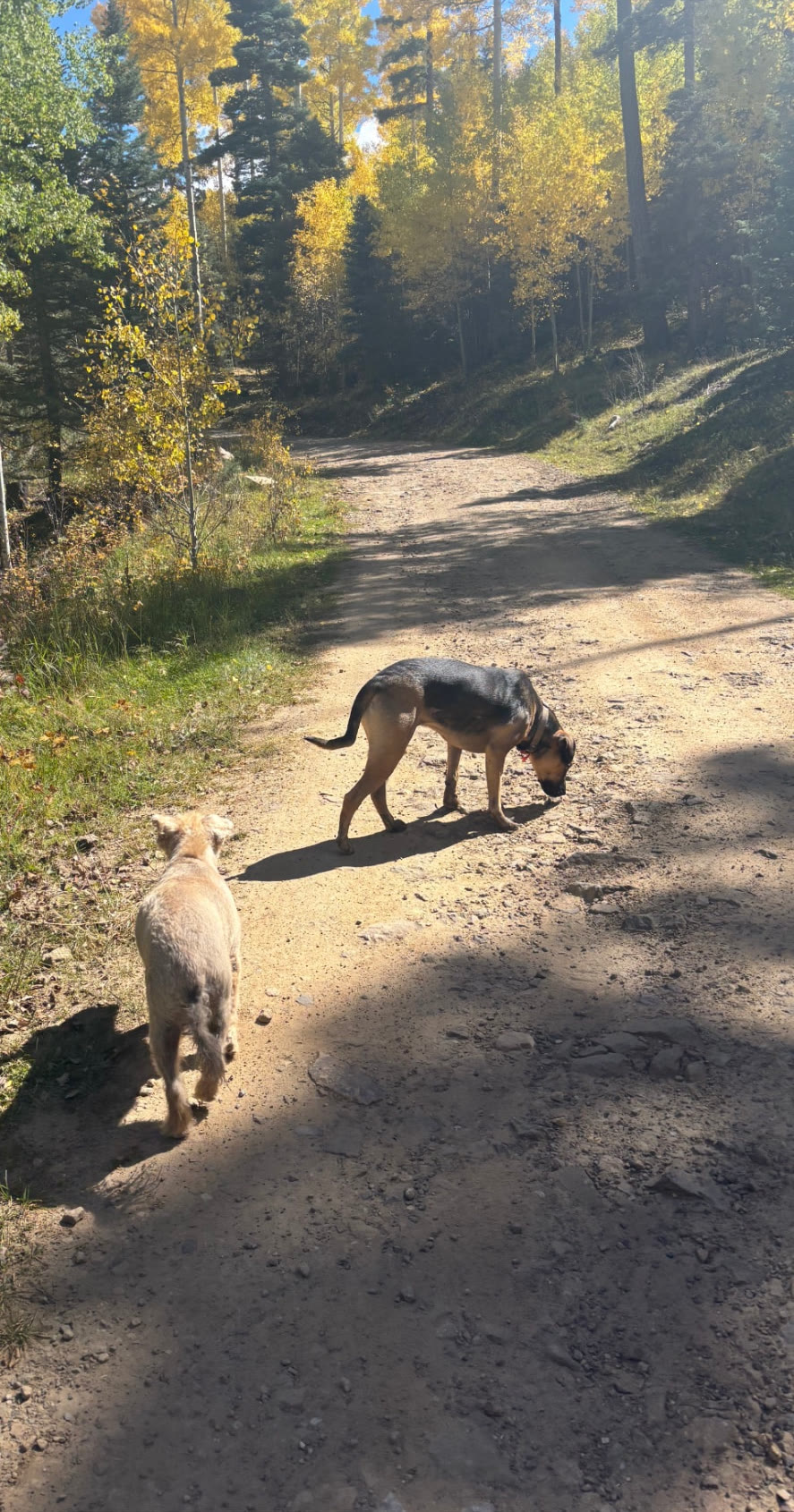
An aspen-lined trail in the Santa Fe mountains

Common plants

Piñon pine & juniperDry foothills
The signature evergreen woodland of the high desert, with compact pines and fragrant junipers.

Chamisa & Apache plumeArroyos & open slopes
Chamisa brings yellow late-season blooms; Apache plume has delicate, feathery seed heads.
Prickly pear, cholla & yuccaSunny, dry ground
Distinctive cacti and spiky-leaved plants adapted to dry conditions. Watch for spines along trails.
Cottonwood & willowCreeks & river corridors
Water-loving trees that create ribbons of shade and habitat along riparian areas.
Ponderosa pine & aspenHigher mountains
Climb into cooler country for tall pine forests and aspen groves that turn gold in autumn.

Regional wildlife

Mule deer & elkWoodlands & mountain meadows
Mule deer occur in foothill country; elk are especially associated with higher mountain landscapes such as Valles Caldera.
Coyotes & bobcatsDesert edges & woodland
Adaptable predators of the region. Observe from a distance and never leave pets or food unattended.
Black bears & mountain lionsMountain country
Present in the broader region, but not everyday sightings. Secure food and follow local wildlife guidance.
Owls, eagles & bluebirdsOpen country & forest
Look for birds of prey above the hills and songbirds around meadow edges and wooded trails.
Lizards & snakesWarm rocks & dry trails
Reptiles are active in warmer weather; rattlesnakes occur in the region. Give all snakes space and keep dogs close.

Regional ecology: Cerrillos Hills, Bandelier plants, and Valles Caldera wildlife. Don’t feed wildlife; keep pets under control and avoid cactus spines.